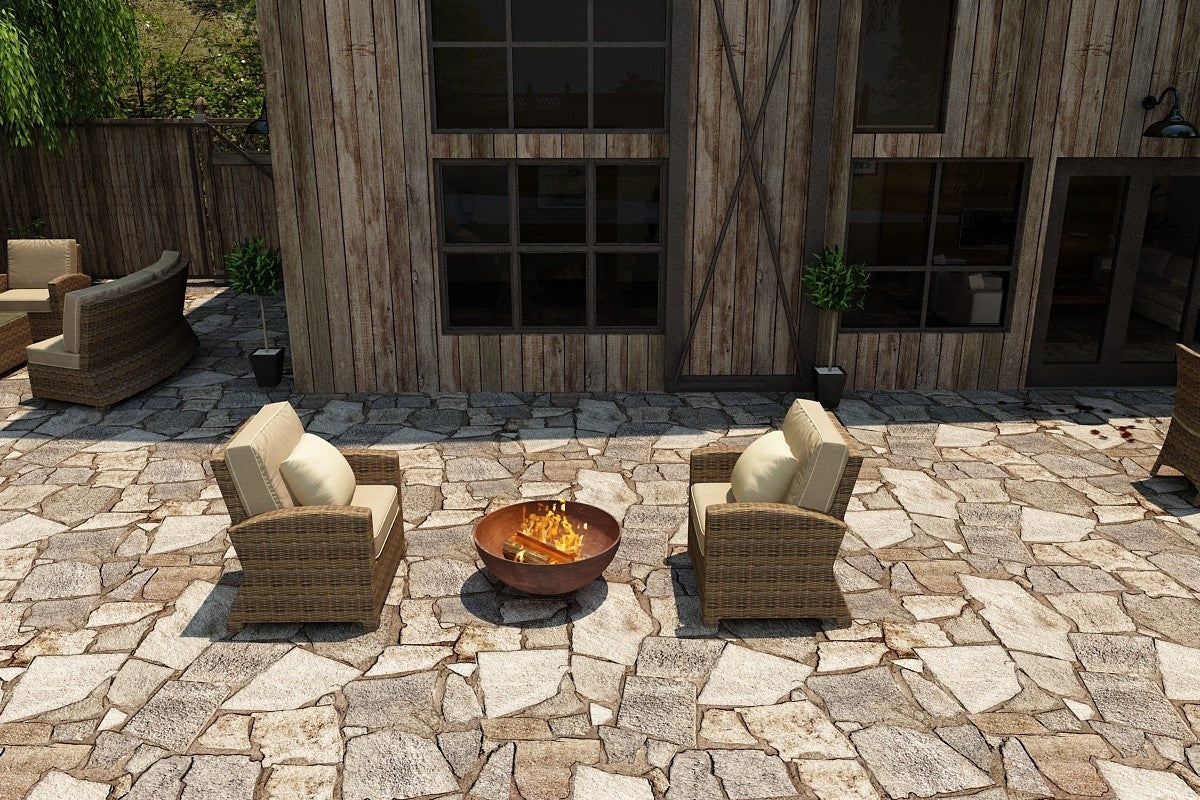

Cold Climates Punish Underpowered Fire Tables
Northern shoppers searching for outdoor fire pit tables for sale in 2026 run into the same frustrating mismatch: most of what’s marketed as a ‘fire table’ was designed for a mild Southern California evening, not a 28°F night in Minnesota or Manitoba. The BTU numbers on the product page look fine until you’re actually sitting outside in November wondering why you’re still cold.
The problem is physics. Wind disperses heat fast — even a light breeze can reduce perceived warmth by 20 to 30 percent. Cold air itself demands more output just to feel the same warmth you’d get at 65°F. And if you’re at elevation — say, Colorado or the Canadian Rockies — thinner air reduces combustion efficiency, which means the burner is working harder for less heat. These factors stack up, and a 40,000 BTU table that feels generous in Georgia can feel genuinely inadequate in the upper Midwest or Ontario.
So what BTU range should northern buyers actually target? For a standard residential patio of 300 to 500 square feet in a cold climate, a fire table running 60,000 to 90,000 BTU provides meaningful warmth within an 8 to 12 foot radius of the burner. Models in the 75,000 to 90,000 BTU range — particularly those running on natural gas — are better suited to genuinely cold evenings where temperatures drop below 35°F. That said, it’s worth being honest: even a high-output fire table is designed to extend the season and create atmosphere, not replace a dedicated heater when it’s 10°F outside. Layering a fire table with a quality patio heater and wind protection is the most effective cold-weather setup.
Below are the key features and specific models worth considering if you’re buying for a cold-climate patio in 2026.
What to Look for Before You Buy
BTU output is the starting point, not the whole answer. Most gas fire tables on the market fall between 30,000 and 65,000 BTU. For cold-climate use, target 60,000 BTU at minimum — and if your patio is exposed to consistent wind, prioritize models at 75,000 BTU or higher. If you’re connecting to natural gas, you’ll typically get higher output than propane from the same burner, since natural gas configurations are often rated higher by manufacturers.
On the propane vs. natural gas question: propane tanks can experience slight pressure drops when temperatures fall below freezing, which can reduce flame height. Natural gas lines deliver a steady, uninterrupted supply regardless of temperature, making them a strong choice for serious winter use if you have a gas line accessible. Propane remains the more practical and portable option for most homeowners, and it performs well in cold weather as long as the tank stays reasonably full.
Material matters as much as BTU for winter durability. Powder-coated steel is common and handles heat well, but the finish can chip over time, leaving the metal exposed to moisture and rust — a real concern in freeze-thaw climates. Cast aluminum is lightweight, rust-resistant, and holds up well through repeated temperature swings. Fiberglass-reinforced concrete (GFRC) is the most weather-resistant tabletop material for cold climates, though it benefits from periodic sealing in areas with hard freezes. Avoid tempered glass tabletops as the primary surface in climates with heavy snow or ice; the glass can crack under thermal stress if not protected.
Wind guards are not optional in exposed settings. A tempered glass wind guard keeps the flame burning steadily in breezy conditions and concentrates radiant heat toward the seating area. Many buyers in cold climates treat a wind guard as a required accessory rather than a nice-to-have. If a model doesn’t include one, check whether a compatible guard is available before purchasing.
A protective cover extends the life of any fire table left outdoors through winter. Snow and ice accumulation in the burner ports can damage ignition components and degrade fire media over time. Most manufacturers recommend an all-weather cover and, for concrete or granite tops, seasonal sealing to prevent moisture penetration.
1. Oriflamme Fire Tables (75,000–90,000 BTU) — Best Overall for Cold Climates
For northern buyers who want the highest available BTU in a residential fire table with serious build quality, Oriflamme is the standout choice. The full-size Oriflamme models — available in granite, Glacier Stone, Savanna Stone, Blackstone, and other finishes — deliver up to 75,000 BTU on propane and 90,000 BTU on natural gas, with an exclusive edge-to-edge burner design that spreads heat across the full 22-inch burner diameter rather than concentrating it in a small ring. That even heat distribution makes a noticeable difference when you’re trying to keep a group of six warm, not just the two people closest to the center.
The dual hidden propane tank system on the 42-inch, 48-inch, and rectangular models holds two standard 20-pound tanks inside the base, providing 20 to 30 hours of continuous burn time depending on flame height. The tabletops are handcrafted from fiberglass-reinforced quartz concrete — a material that has been tested in thousands of homes for over a decade and holds up well in freeze-thaw climates. All parts are interchangeable, which means the table is genuinely repairable rather than disposable.
For cold-climate buyers, the coffee table height (21¾ inches) is worth noting: it positions the burner closer to seated guests, which maximizes radiant heat transfer compared to taller dining-height tables.
All Backyard Fun is the exclusive online distributor of Oriflamme Fire Tables and carries the full lineup of sizes and finishes. You can browse the complete Oriflamme collection to compare models, or explore the full fire tables collection if you want to see additional high-BTU options.
2. GFRC Concrete Fire Tables (55,000–70,000 BTU) — Best for Exposed Patios
Glass fiber reinforced concrete fire tables sit at a useful intersection for cold-climate buyers: they’re heavy enough to stay stable in wind, the material handles freeze-thaw cycles better than standard concrete when properly sealed, and their thermal mass absorbs and radiates heat evenly rather than just throwing it straight up. Models in the 55,000 to 70,000 BTU range with a 304 stainless steel burner and a rectangular footprint work particularly well for exposed patios in the northern US and Canada, where wind is as much a factor as temperature.
When shopping GFRC models, look for a 304 stainless steel burner (more corrosion-resistant than standard steel), an included wind guard, and a matching protective lid. Rectangular shapes in the 48-to-60-inch range seat four to six people comfortably and provide more surface area for radiant heat to spread laterally. Round models in the 36-to-48-inch range work better for smaller, tighter seating groups.
A note on sealing: concrete fire tables in freeze-thaw climates should be sealed at least once a year to prevent moisture from penetrating the surface and causing cracking. This is a 20-minute job with the right sealer and is worth doing before the first hard freeze of the season.
3. Cast Aluminum Fire Tables (50,000–65,000 BTU) — Best for Longevity in Wet Climates
Cast aluminum fire tables don’t hit the BTU ceiling that granite or concrete models can reach, but they’re the most durable frame material for climates that combine cold with heavy precipitation — the Pacific Northwest, the Great Lakes region, Atlantic Canada. Aluminum is naturally rust-resistant, which matters when a table is exposed to repeated cycles of snow, ice, and melt water over several winters.
Models in the 50,000 to 65,000 BTU range with a powder-coated cast aluminum frame and a stainless steel H-burner perform reliably in cold weather. The H-burner design creates wider, more even flames than a single ring, which improves heat distribution across a larger seating area. Pair with a tempered glass wind guard — either included or purchased separately — for meaningful cold-weather performance.
Cast aluminum tends to be lighter than concrete, which makes repositioning easier but can mean less stability in high winds. If your patio is particularly exposed, weighting the base or positioning the table against a windbreak adds stability without requiring permanent anchoring.
Fuel, Covers, and the Honest Limit of Fire Tables in Winter
A few practical notes for cold-climate buyers before purchasing:
Propane pressure and cold weather. Propane tanks can experience reduced pressure when temperatures drop significantly below freezing, which may cause the flame to burn lower than the rated BTU. Keeping the tank at least half full helps maintain consistent pressure. Natural gas eliminates this variable entirely, making it the preferred fuel for buyers in Minnesota, Wisconsin, the Dakotas, or Canadian provinces where January temperatures routinely drop well below zero.
The honest BTU ceiling. At 40°F or below, even a 60,000 BTU fire table won’t heat a standard open patio on its own. Fire tables are designed to extend the season — they take a 45°F evening and make it feel like 60°F with the right seating configuration and wind protection. For temperatures below 35°F, pairing a fire table with one or two overhead patio heaters is the practical approach. The fire table provides ambiance and radiant warmth at close range; the overhead heaters handle the broader air temperature.
Cover and seal every season. In climates with genuine winters, an all-weather cover is the single most effective way to extend the life of any fire table. Snow and ice sitting in an uncovered burner pan will degrade fire glass, corrode ignition components, and, in the case of concrete tops, accelerate surface wear. Most manufacturers recommend covering the table whenever it won’t be used for more than a day or two during the off-season.
For buyers in the northern US and Canada shopping for outdoor fire pit tables for sale in 2026, the combination of high BTU output (75,000+), a durable tabletop material, a wind guard, and a proper cover will deliver the best cold-weather experience available in a residential fire table. All Backyard Fun has carried these products since 2007 and can help match the right model to your specific patio setup and climate — reach out directly if you have questions about sizing or fuel configuration.