
The Question Nobody Asks Until It’s Too Late
Most people spend more time choosing a paint color than choosing patio furniture. Then summer arrives, twelve people show up for a cookout, and there are exactly four chairs and a wobbly side table. The furniture decision turns out to matter a lot more than anyone planned.
After nearly two decades helping families build outdoor spaces they actually use, the pattern is clear: the sets that work best for entertaining aren’t necessarily the most expensive ones—they’re the ones chosen with an honest picture of how the space gets used. How many people typically gather? Does the party move from dining to lounging after dinner? Does the furniture stay out through winter, or does it go under a cover in October?
Those questions shape every recommendation worth giving. So here’s what family-owned outdoor specialty retailers—the kind of stores where a real person answers the phone—consistently point customers toward when the goal is a backyard built for people.
Start With the Layout, Not the Look
The single most common mistake in outfitting a backyard for entertaining is buying furniture that photographs beautifully but seats people awkwardly. A long rectangular dining table for eight looks stunning in a catalog. On an actual 12-by-14-foot patio, it leaves no room to pull a chair back without bumping a planter.
Family-owned retailers tend to push back on this instinct early. The first conversation is almost always about square footage and traffic flow—where does the grill sit, where does the door open, where do kids run through. From there, the furniture category usually picks itself.
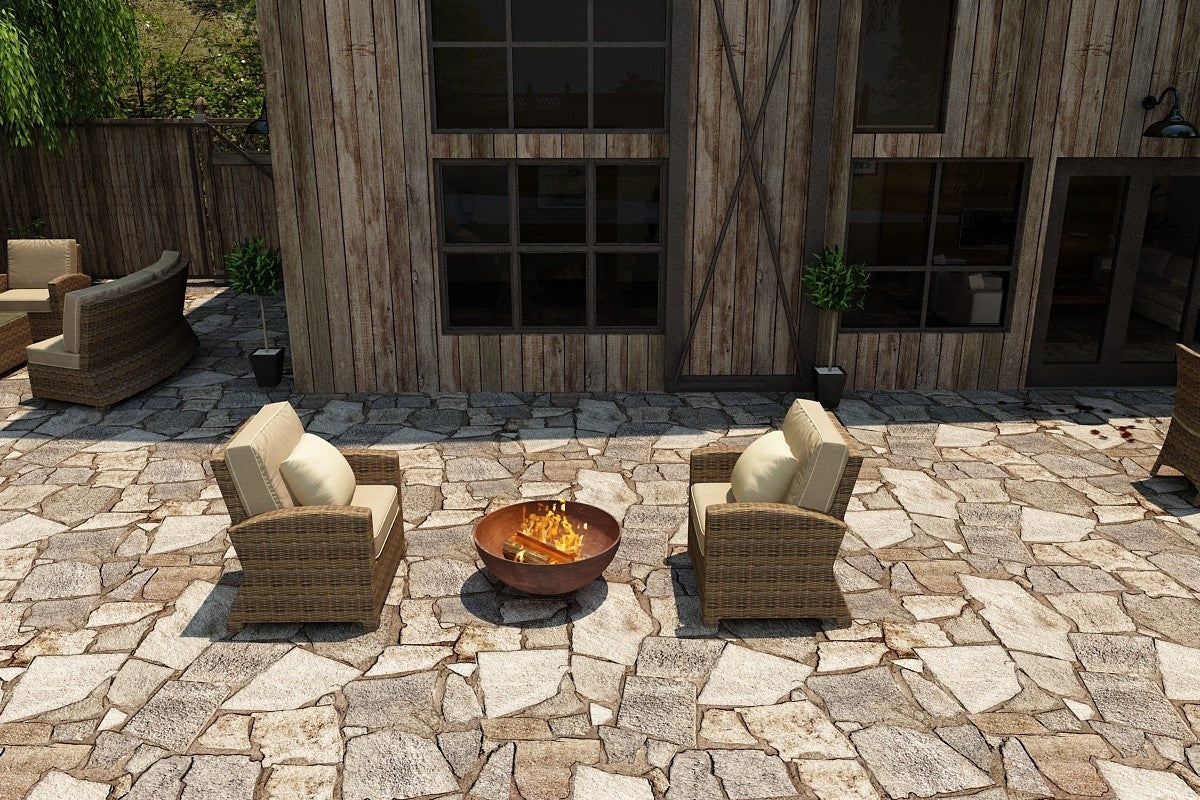
For most entertaining-focused backyards, the layout breaks into two zones: a dining area anchored by a table that seats your realistic guest count (not your aspirational one), and a conversation or lounge area where people drift after the meal. If the space only supports one zone, a deep-seating conversation set with a fire table at the center tends to be the higher-value choice for evening entertaining—it keeps people gathered longer than a dining table does once the plates are cleared.
Modular sectionals have become the dominant choice for the lounge zone in 2026, and for good reason. A well-configured modular set can shift from a U-shaped family sofa layout to an open conversation setup when guests arrive—something a fixed sofa simply can’t do. Pair that flexibility with a fire table at the center and you’ve created the kind of space people don’t want to leave.
For dedicated dining, the math is straightforward: allow roughly 24 inches of table width per person and at least 36 inches of clearance behind each chair. A 6-seat dining set needs more real estate than most people budget for. If the space is tight, a round table seats the same number of people in a smaller footprint and tends to create better conversation at the table—everyone faces everyone else.
Materials: What Actually Survives Five Years of Real Use
This is where the advice from specialty retailers diverges most sharply from what big-box stores emphasize. The materials conversation isn’t about aesthetics first—it’s about your climate, your maintenance tolerance, and whether you want furniture that outlasts the deck it sits on.
Powder-coated aluminum is probably the most practical all-around frame material for most American climates. It doesn’t rust, dries quickly after rain, and stays light enough to rearrange without a second person. The trade-off is that aluminum seating is not comfortable without cushions—budget for quality cushions upfront and plan to replace them every four to six years. Dark aluminum frames also heat up in direct sun, which matters in climates with intense summer heat.
Teak sits at the other end of the spectrum. Its naturally high oil content makes it resistant to moisture, rot, and insects without any treatment at all. Left untreated, it weathers to a silver-gray patina over a season or two—many people prefer that look. If you want to maintain the original golden-brown color, a light oiling once or twice a year does it. Quality teak furniture from reputable manufacturers routinely lasts 20 to 30 years, which makes the higher upfront cost look very different when you divide it across decades. The downside: teak is heavy, so it’s not ideal if you rearrange your patio layout frequently.
All-weather synthetic wicker (specifically PE resin woven over aluminum frames) is the comfort choice. The woven structure has a natural give that makes seating feel more relaxed than rigid metal or wood, and it bridges traditional and contemporary aesthetics well. Quality variance in this category is extreme, though—cheap imports can unravel within two seasons, while hand-woven PE resin on a solid aluminum frame can last 15 years or more. If you’re buying wicker, the frame material matters as much as the weave: look for powder-coated aluminum underneath, not steel.
HDPE (high-density polyethylene), sometimes called poly lumber, is worth mentioning for families with kids or anyone who wants genuinely zero-maintenance furniture. It doesn’t rot, crack, splinter, or absorb moisture, and it can stay outside through hard winters without consequence. It lacks the warmth of teak and the resort feel of wicker, but for pure practicality it’s hard to beat.
The honest summary: for most entertaining setups, a powder-coated aluminum dining set paired with a PE wicker or teak conversation set covers both zones well and holds up across most U.S. climates.
The Fire Table Question
A fire table changes what a backyard can do after 8 p.m. That’s not a small thing. The gatherings that go late, the conversations that keep going past the point where people would otherwise drift inside—those almost always happen around a fire feature.
The practical question is whether a fire table integrates into the furniture set or stands alone. Sets designed around a central fire table tend to create a more cohesive look and keep seating at the right distance from the flame. Standalone fire tables give more flexibility—you can move them, pair them with different furniture over time, or replace one without replacing the other.
For families who entertain regularly, a gas fire table is generally the more convenient choice over a wood-burning fire pit. There’s no wood to store, no ash to clean, and the flame adjusts instantly. BTU output matters more than most buyers realize: a fire table in an open backyard in the Midwest or Northeast needs enough output to actually provide warmth on a cool September evening, not just ambiance.
All Backyard Fun carries the Oriflamme Fire Tables line—the original gas fire table concept, now more than a decade in development—alongside a full range of patio furniture sets from premium brands including Northcape, Sunset West, and Prism Hardscapes. As a family-owned business since 2007, the store’s approach is to help customers build a complete outdoor space rather than sell individual pieces—which means the fire table and furniture conversation happens together, not separately.
Seating Counts and Set Configurations Worth Knowing
When entertaining-focused buyers ask what size set to buy, the reliable answer from specialty retailers is: buy for your typical gathering, not your maximum one. A 10-piece sectional that seats twelve looks generous until you’re storing it through a rainy spring because it overwhelms the space.
For a patio that hosts 6 to 8 people regularly, a 5- to 7-piece conversation set with a central table (fire or standard) covers the lounge zone well. Add a 4- to 6-seat dining set if the space allows a second zone, or consider an extendable dining table if the guest count varies significantly. Extendable tables with butterfly-leaf mechanisms that store inside the table are a practical solution for hosts whose gatherings range from a family dinner for four to a neighborhood party for twelve.
For larger spaces and frequent hosting, a sectional with 8 or more seats gives the flexibility to break into smaller conversation clusters or consolidate for a group. Look for sets that include at least one ottoman or coffee table—people need somewhere to set a drink, and it keeps the seating arrangement from feeling temporary.
One detail that often gets overlooked: seat depth. Dining chairs are typically 17 to 19 inches deep—designed to keep people upright at a table. Lounge chairs and sectional seats run 24 to 28 inches deep, which is what makes them feel like you can actually relax in them. Mixing up dining and lounge seating in the same zone is a common mistake that leaves guests either perching uncomfortably or slouching at a dining table.
What 17 Years of Selling Outdoor Furniture Teaches You
The customers who end up happiest with their outdoor spaces are almost never the ones who bought the first set they found on a big-box site. They’re the ones who thought through how the space actually gets used—who comes over, how long they stay, whether the entertaining is casual or more structured—and then matched the furniture to that reality.
Family-owned outdoor retailers tend to be better at that conversation than large retailers, partly because their business model depends on repeat customers and referrals rather than volume. There’s less incentive to push the most expensive set and more incentive to get the recommendation right.
A few things that consistently come up in those conversations: buy the best cushion fabric you can afford (Sunbrella and similar solution-dyed acrylics resist fading and mildew far better than polyester), invest in furniture covers if the set will stay outside year-round, and don’t underestimate the value of a matching umbrella to extend the usable hours of a dining area on hot afternoons.
The outdoor accessories that complete a space—covers, umbrellas, accent lighting—are often what separates a patio that gets used three months a year from one that gets used nine. That’s the real goal: not a beautiful space that sits empty, but one where your family actually wants to be.
If you’re working through the decision and want guidance from people who have been doing this since 2007, All Backyard Fun’s patio furniture collection is a good place to start—with free shipping on most orders and a team that treats every purchase like a conversation, not a transaction.