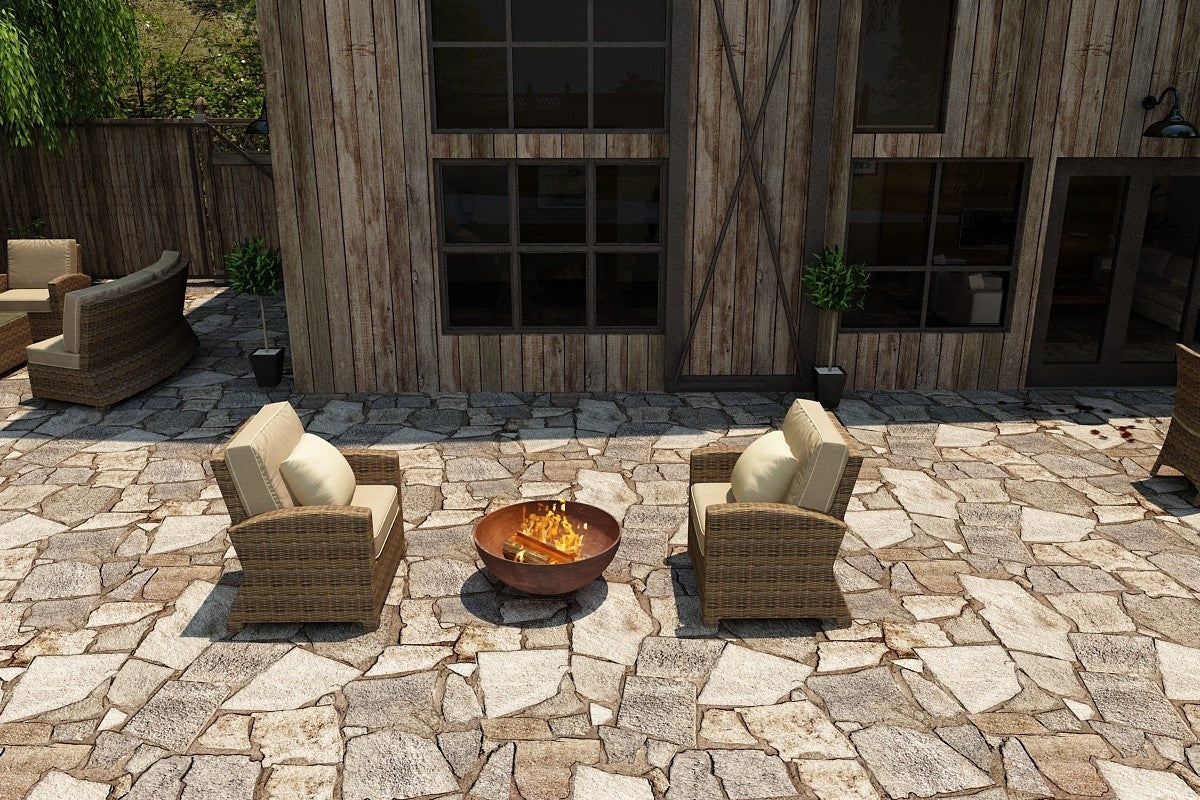

When Your Backyard Is the Problem (In the Best Way)
Most patio furniture guides are written for compact decks and apartment balconies. If you have a genuinely large backyard—say, 400 square feet of usable patio or more—the usual advice about bistro sets and three-piece conversation groups barely scratches the surface. The real challenge with a spacious outdoor area is not finding furniture that fits; it is finding furniture that fills the space without making it feel cluttered or disjointed.
A large, empty patio tends to look unfinished no matter how good the individual pieces are. The fix is almost always scale and zoning: choosing sets sized for the space, then organizing them into distinct functional areas. In 2026, the outdoor furniture market offers more options for large-scale setups than ever—modular sectionals that seat eight or more, dining configurations that seat ten comfortably, and conversation groups designed to anchor an open lawn. This guide breaks down the three main categories and what to look for in each.
Before buying anything, pull out a tape measure. A useful planning rule: leave at least 24 to 30 inches of clearance between any seating and a wall, fence, or railing, and allow roughly 3 feet of clearance around a dining table so chairs can pull out without blocking foot traffic. On a large patio, that still leaves plenty of room—but it keeps the layout from feeling like an obstacle course.
1. Modular Sectionals: The Anchor Piece for Spacious Lawns
A sectional does something a collection of individual chairs cannot: it defines a room. On a wide-open patio, an L-shaped or U-shaped sectional acts as a visual anchor, pulling the space together and giving it the settled, intentional look of an indoor living room brought outside.
For large backyards specifically, modular sectionals are the strongest choice. Unlike fixed configurations, modular pieces can be rearranged—extended along one wall, opened into a U for a fire table centerpiece, or split into two separate seating zones when you need the yard for a party. Sets in the 7- to 10-piece range are common and can seat eight or more adults without crowding.
When comparing materials, powder-coated aluminum frames with HDPE all-weather wicker tend to hold up best over multiple seasons. Aluminum never rusts, and high-density polyethylene wicker resists the UV fading and brittleness that cheaper PVC wicker develops after a summer or two. For cushions, solution-dyed acrylic fabrics—Sunbrella being the most recognized—genuinely resist water, mold, and UV damage across years rather than seasons. Thicker cushions (4 inches or more) matter more on a sectional than on dining chairs, since people tend to linger and lounge rather than sit upright.
One layout tip worth keeping: on a patio larger than 15 by 15 feet, a sectional alone will probably leave the space feeling half-finished. Plan for the sectional to occupy one zone—ideally anchored to a corner or backed against the house—and leave the remainder of the patio open for a dining zone or fire feature. That separation is what makes a large backyard feel designed rather than just furnished.
Browse the outdoor modular sectionals at All Backyard Fun for premium configurations from brands like Northcape and Sunset West, built specifically for extended outdoor use.
2. Outdoor Dining Sets: Sized for the Table You Actually Need
There is a version of this mistake in almost every large backyard: a dining set sized for a small deck dropped into an open patio, surrounded by empty space on all sides. A six-seat rectangular table that works beautifully on a 12-by-12 patio looks undersized and awkward on a 20-by-25 terrace.
For genuinely large outdoor spaces, aim for dining sets that seat eight to ten people as a baseline. Rectangular tables in the 84-to-96-inch range fill the visual space appropriately and handle the practical reality of hosting larger groups without the add-a-chair scramble. Round tables tend to work better for intimate conversation but cap out at around six seats before they become unwieldy; for big backyards, a long rectangular or oval table usually serves better.
Material choices for large dining sets follow similar logic to sectionals. Teak remains the gold standard for natural wood—it contains natural oils that repel water and resist rot for decades without much intervention beyond occasional cleaning. Powder-coated aluminum is the low-maintenance alternative: it will not rust, crack, or fade, and it stays light enough that moving the table for a party does not require two people. Cast aluminum tends to be heavier and more ornate, which suits traditional or transitional backyard styles.
Chair selection matters more than most buyers expect. Stacking chairs are practical for large sets because they store compactly when not in use. Swivel dining chairs add flexibility—guests can turn to join a conversation at the adjacent lounge area without leaving the table. For a more relaxed dining experience, dining chairs with padded seats in a performance fabric will hold up to daily use and the occasional spilled drink far better than standard chair pads.
If outdoor dining is a regular event at your house, pairing the dining set with a large market umbrella or a pergola structure overhead makes the space usable even in direct afternoon sun. A 11-foot or 13-foot umbrella is typically the right scale for an eight-to-ten person table. Explore the full range of outdoor dining sets to find configurations that match both the scale of your space and the style of your home.
3. Conversation Groups: Building a Second Zone Around a Fire Feature
On a large backyard, a conversation group works best as a second zone—not the only seating, but the place people migrate to after dinner, or the area centered on a fire table for cooler evenings. This is where the category earns its name: the furniture arrangement itself encourages face-to-face conversation, with seating positioned inward around a central coffee table or fire feature rather than oriented toward a view.
A standard outdoor conversation set typically includes a loveseat or sofa, two armchairs, and a coffee table. For larger spaces, upgrading to a five- or six-piece set that adds a second loveseat or a pair of ottomans creates a more substantial grouping that does not look sparse against an open lawn. Swivel chairs are particularly useful in a conversation arrangement because they let people rotate toward the fire, the view, or the person they are talking to without repositioning the whole chair.
The most common pairing in 2026 is a conversation group built around a gas fire table. A fire table replaces the standard coffee table with a propane or natural gas burner set into a stone, concrete, or steel surround, adding warmth and ambiance that extends outdoor use well into the evening and into shoulder seasons. All Backyard Fun carries the Oriflamme line of gas fire tables—available in multiple sizes and finishes—which pair cleanly with most conversation group configurations. You can browse the Oriflamme gas fire pit tables to see current options.
For the seating itself, deep-seated frames with high-resilience foam cushions make the most sense in a lounge-oriented conversation group. Frames should sit low enough that they feel relaxed rather than upright—this is not dining seating. The two-thirds rule is a useful check here: no more than two-thirds of any defined zone should be filled with furniture. If the conversation area feels crowded when you walk through it mentally, it probably is.
How to Zone a Large Backyard with Multiple Sets
The most effective large backyard layouts treat the outdoor space the way a designer would treat an open-plan interior: each zone gets a clear function, a visual anchor, and enough separation from adjacent zones that they feel distinct without feeling disconnected.
A practical starting point for a patio in the 400-to-600-square-foot range:
- Zone 1 (Dining): An eight- to ten-seat dining set positioned closest to the house, near the kitchen door or grill. This keeps the traffic pattern logical—food comes out, people sit down, plates go back inside without threading through the lounge area.
- Zone 2 (Lounge/Sectional): A modular sectional set back from the dining zone, ideally with a coffee table or fire table at center. Use an outdoor area rug to define the boundary of this zone visually.
- Zone 3 (Conversation/Fire): A smaller conversation group anchored around a fire table, positioned at the far end of the patio or at a slight angle to the sectional. This creates a natural gathering point for evenings and gives guests somewhere to drift when the dinner table clears.
An outdoor rug under each zone and consistent lighting—string lights overhead, lanterns at table level—does most of the work of making a large backyard feel cohesive rather than scattered. Keeping the walkways between zones at least 30 to 40 inches wide ensures the space stays comfortable when multiple groups of people are moving through it at the same time.
Brands like Northcape and Sunset West, available through All Backyard Fun’s patio furniture collection, offer coordinating pieces across sectionals, dining sets, and conversation groups—which makes it easier to build a multi-zone backyard that looks intentional rather than assembled from mismatched purchases over several seasons.
What to Prioritize When Buying for a Large Space
A few things tend to matter more for large-backyard buyers than for people furnishing a small porch:
Scale first. Furniture that looks proportional in a showroom or a product photo can disappear in a large open space. When in doubt, size up. A sectional that seats eight tends to look right in a space where a five-seat version would look like it wandered in from a smaller patio.
Durability over price per piece. Large-backyard sets involve more pieces and a higher total investment. Buying frames made from powder-coated aluminum or marine-grade teak, with solution-dyed cushion fabrics, will outlast cheaper alternatives by years—which matters when you are replacing eight dining chairs rather than two.
Modularity where possible. Modular sectionals and extendable dining tables give a large backyard the flexibility to accommodate two people on a Tuesday evening and twenty people on a Saturday afternoon without a complete furniture rearrangement.
Cushion storage or weather resistance. More furniture means more cushions to manage. Either invest in truly weather-resistant cushion fabrics that can stay outside through light rain, or buy sets that come with storage covers. For large setups, a dedicated outdoor storage bench or deck box pays for itself quickly in extended cushion life.