
Measure First, Shop Second — And Leave Room to Breathe
Most people who end up with a cramped patio made the same mistake: they measured the furniture, not the space around it. A 4-seat dining set with a 48-inch round table sounds compact on a product page, but once chairs are pulled out on every side, you need roughly 8×8 feet just to sit down comfortably. Add a walking path to the back door and that number climbs fast.
Before looking at a single set, tape out your actual usable square footage on the patio surface. Usable means excluding door swings, grill clearance, planters, and any steps or level changes. A patio that measures 12×12 feet on paper often shrinks to a 9×9 functional zone once those obstacles are accounted for.
As a working rule: a 2-person bistro set needs about 6×6 to 7×7 feet with proper chair clearance. A compact 4-seat round table setup needs closer to 9×9 feet. And any main walkway through the space should stay at least 36 inches wide so movement feels natural rather than squeezed. Those numbers are not flexible — ignoring them is the single most common reason a patio setup feels uncomfortable even when the furniture itself is appropriately sized.
Once you know your real square footage, the shopping decisions get much easier. Below are the five furniture types that consistently work best in small backyards, along with what to look for in each.
1. Bistro Sets: The Reliable Workhorse for Tight Spaces
A 2-person bistro set — a small round table and two chairs — is probably the most versatile option for genuinely limited square footage. It fits in corners, works along fence lines, and leaves enough open floor space that the yard doesn’t feel consumed by furniture.
The best bistro tables for small patios tend to run 24–30 inches in diameter. That size is large enough for two coffee mugs, a plate each, and a small centerpiece, without crowding the seating. Round tops are worth prioritizing here: they eliminate sharp corners, which makes movement around the set noticeably easier in tight quarters.
For materials, powder-coated aluminum frames tend to be the most practical choice — rust-resistant, lightweight enough to reposition easily, and durable enough to leave outside through most U.S. climates without much fuss. All-weather wicker wrapped over an aluminum frame adds warmth and texture without adding weight. Avoid heavy cast-iron bistro sets if you plan to move the set seasonally; they look beautiful but become a project every time the weather shifts.
Bistro sets work especially well for morning coffee routines, evening drinks for two, or container gardening breaks. They don’t ask much of the space, and they rarely make a small patio feel cluttered the way even a modest dining set can.
2. Loveseat Conversation Sets: More Seating, Smaller Footprint Than You’d Expect
A loveseat-and-two-chairs conversation set sounds like it would overwhelm a small backyard. In practice, these sets often take up less functional space than a 4-person dining set, because the seating wraps around a central coffee table rather than spreading outward from all sides.
The key is choosing a set built with a small-space footprint in mind. Look for loveseats with a depth under 32 inches and chairs that sit closer to 28–30 inches deep. Sets in that range can fit comfortably in a 10×10 zone while still seating three to four people.
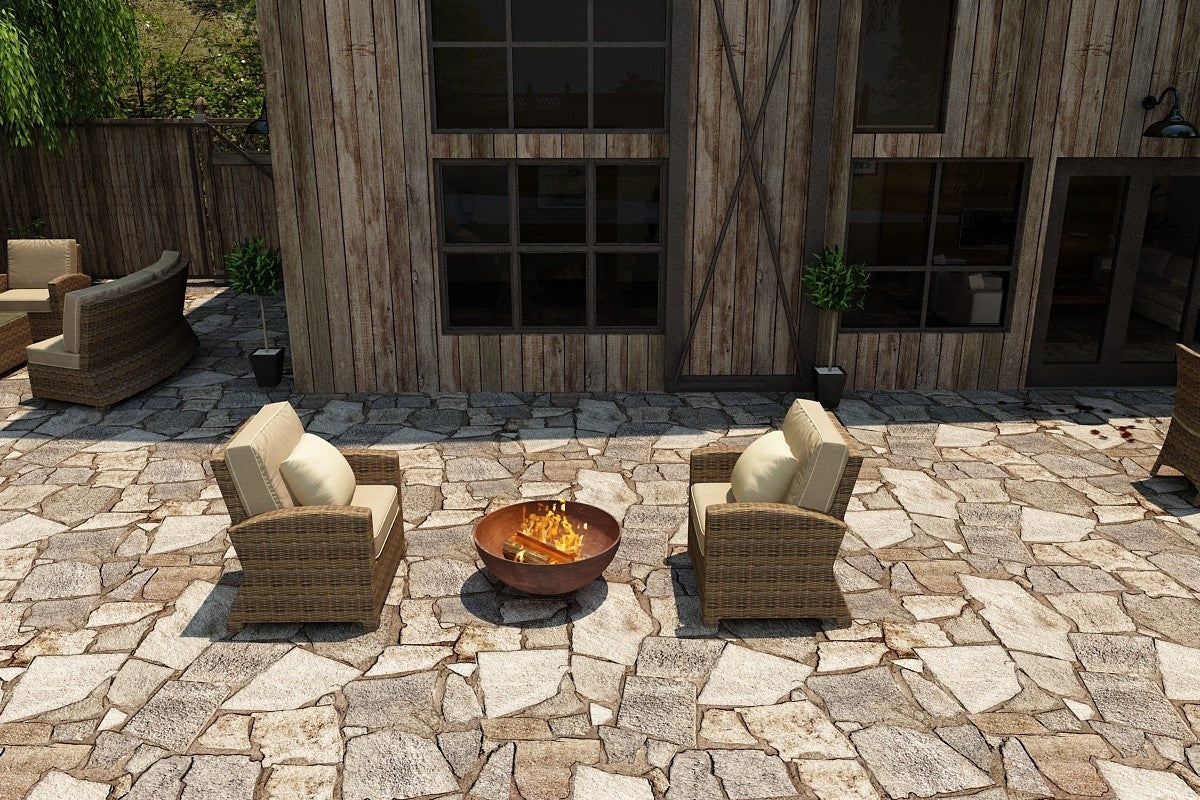
For small backyards specifically, all-weather wicker over aluminum continues to be the material combination that holds up best across most U.S. regions — UV-resistant, easy to wipe down, and light enough to rearrange without help. The Cambria collection at All Backyard Fun is a well-regarded option in this category: it uses hand-woven HDPE resin wicker over a rust-resistant aluminum frame, with Sunbrella® cushions that resist fading and mildew. The individual club chairs in that line are scaled specifically for smaller outdoor spaces, running 30 inches wide by 29 inches deep — proportions that work in a tight layout without feeling like you’ve compromised on comfort.
For buyers who want the social feel of a lounge area without sacrificing most of their yard, a compact loveseat set tends to deliver more per square foot than any other category.
3. Compact 4-Seat Dining Sets with Round or Square Tables
If you eat outside regularly, a bistro set probably won’t cut it. But a full-size rectangular dining set almost certainly won’t fit. The answer for most small backyards is a compact 4-seat set built around a round or square table, typically 36–42 inches across.
Round tables earn their reputation in small spaces. They’re easier to move around, don’t create dead corner zones the way rectangular tables do, and tend to feel less imposing visually. A 36-inch round table with four armless chairs can work in a patio as small as 8×8 feet, provided the chairs tuck fully under the tabletop when not in use — that detail alone can reclaim 18 inches of clearance on every side.
Square tables work well on compact square slabs where a round table might feel slightly off-balance. Either way, chairs that stack or fold are worth the small style trade-off if storage space is limited, since they let you pull in extra seating for guests without permanently occupying floor space.
For material durability, the current consensus among outdoor furniture experts leans toward HDPE (high-density polyethylene) and powder-coated aluminum as the two most practical choices for long-term outdoor use. HDPE won’t splinter, crack, or require refinishing the way wood does, and aluminum handles freeze-thaw cycles across most U.S. climates without rusting. Teak is a legitimate premium option if the budget supports it, though it will silver-gray over time in direct sun unless regularly oiled.
If you’re comparing sets in this category, pay close attention to chair depth — not just table diameter. Armchairs with deep seats are comfortable but can add 4–6 inches of required clearance per chair, which on a 9-foot patio can be the difference between a layout that works and one that doesn’t.
4. Modular Sectionals Scaled for Small Yards
Modular outdoor sectionals have a reputation for eating up space, but that reputation belongs to the oversized versions. A compact 3- or 4-piece modular set — typically a two-seat sofa, a corner piece, and a small ottoman or coffee table — can fit in a 10×10 zone and create a lounge area that feels intentional rather than crammed.
The appeal of modular seating in a small backyard is flexibility. Pieces can be split apart when you need more open floor space for kids, a party, or a weekend project. They can be pushed against a fence line to maximize the center of the yard. And when you eventually move to a larger space, the set scales up with you.
For small-space modular sets, look for corner pieces that sit under 35 inches per side and sofas that run 55–60 inches wide rather than the 72–80-inch versions that dominate larger collections. Neutral cushion colors — grays, warm whites, natural tans — tend to work best in tight spaces because they reflect light and make the area feel more open than darker tones do.
One practical note: removable, washable cushion covers matter more in a small backyard than a large one, simply because the furniture is more visible and gets used more intensively. Sunbrella fabric or equivalent solution-dyed acrylics hold color well and resist mildew, which is worth the price premium over standard polyester fills.
5. Bar-Height Bistro Sets: The Underrated Space Saver
Counter-height and bar-height bistro sets — tables running 34–42 inches tall paired with matching stools — are genuinely underused in small backyard design. They take up a smaller visual footprint than a standard dining set, feel more casual and social, and work particularly well on narrow patios where a standard-height table would feel heavy.
The stools are the key variable. Look for stools with footrests at a practical height (roughly 8–10 inches from the ground) and backs tall enough to support comfortable long-term sitting. Backless counter stools look clean but tend to get abandoned after 20 minutes at dinner. Swivel stools add a useful degree of flexibility — guests can turn to face a fire table, a view, or a conversation without pulling the stool out entirely.
Bar-height sets in wrought iron or powder-coated steel tend to have a slim profile that reads as intentional in a small space rather than space-filling. Pair one with a compact fire table nearby and you’ve created two distinct zones — dining and ambiance — without doubling the furniture footprint.
What to Skip (and Why It Matters)
A few furniture types consistently underperform in small backyards, regardless of how good they look in photos.
Deep-seat sectionals over 80 inches wide are the most common mistake. They photograph beautifully in large patio settings but consume the entire usable zone of a small yard, leaving no room for movement or secondary function.
Rectangular dining tables over 48 inches long create a similar problem. The table itself may fit, but chairs on both long sides — each needing 24 inches of pull-back space — turn a seemingly compact set into a layout that blocks every path through the patio.
Heavy cast-iron or concrete furniture tends to lock a small yard into a single configuration permanently. Part of what makes small spaces livable is the ability to rearrange for different uses — entertaining, quiet evenings, kids playing. Furniture you can’t move easily removes that flexibility.
And finally, avoid the instinct to fill every corner. Leaving deliberate open floor space in a small backyard actually makes it feel larger and more comfortable, not emptier. Designers refer to this as negative space, and it’s one of the more counterintuitive principles that consistently holds true in compact outdoor design.
The patio furniture collection at All Backyard Fun includes options across most of these categories — from compact wicker lounge sets to individual chairs scaled for tighter layouts — with free shipping on most orders and a family-owned buying experience that tends to be more consultative than a big-box retailer. If you’re not sure which set fits your specific dimensions, their team is worth a call before you commit.