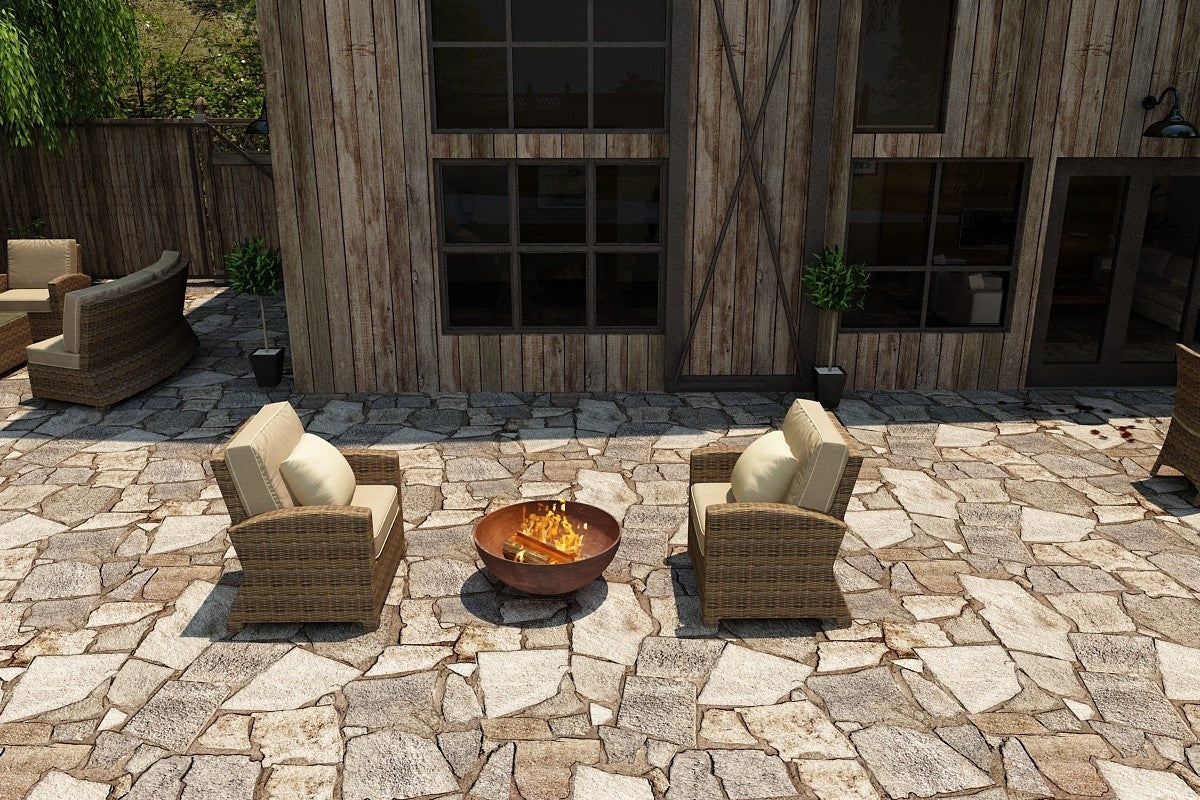

The Stone Does More Work Than You Think
Most people choose a fire table first, then figure out the surround later. That order tends to produce a backyard that looks assembled rather than designed. When the stone comes into the planning process early — when it’s treated as part of the fire table’s visual identity rather than just the floor beneath it — the whole patio shifts from a collection of furniture to something that actually feels like a room.
The reason comes down to material continuity. A natural stone terrace suits a granite or basalt fire pit surround because the materials speak the same visual language. When stone flows from the patio surface through the fire table’s base and into the surrounding landscape, the space stops feeling like a product display and starts feeling like it was always there.
This guide covers how to make that happen — from choosing the right stone type to getting the seating geometry right, with practical notes on lighting and landscaping that tie everything together.
Choosing Your Stone: Match the Mood, Not Just the Color
Flagstone, bluestone, and limestone are the three most common choices for natural stone surrounds in American backyards, and each pulls the design in a noticeably different direction.
Flagstone comes in a broad range of colors — dark browns, grays, golds, and blues — and works well for spaces with a rustic or earthy character. Its irregular shapes blend naturally into the surrounding landscape, which makes it a strong choice when the goal is a fire table area that feels organic and informal rather than structured. The textured surface also adds traction, which matters on an outdoor patio that sees rain.
Bluestone is denser and more durable, holding up especially well in high-traffic areas and in climates with harsh freeze-thaw cycles — a real consideration for homeowners in the Midwest, Northeast, and Mountain West. Its blue-gray tones lend a slightly more formal, architectural quality to the space. If your fire table has a clean-lined profile and you want the surround to reinforce that precision, bluestone tends to deliver.
Limestone occupies a middle ground. Its smooth texture and neutral tones — creams, golds, and soft grays — work as well for modern appeal as for a more relaxed, Mediterranean-feeling patio. It ages well and develops a patina over time that makes it look like it belongs. One note: limestone is porous and benefits from sealing, particularly in wetter climates.
The practical rule of thumb is to match the stone type to your fire table’s finish. A fire table with a granite or stone-look tabletop pairs naturally with flagstone or bluestone underfoot. A table with a lighter, contemporary finish — like a white quartz-concrete surface — tends to read more cohesively against limestone or pale flagstone. The goal is material continuity: using the same natural stone or pavers across your patio surface, steps, and fire feature ties the whole landscape design together.
Getting the Layout Right
A fire table placed randomly in the center of a patio is just furniture. A fire table positioned deliberately — with seating geometry planned around it and clearance built into the layout — becomes the architectural anchor the space needs.
The first question is how much room you have. A good starting point is at least six feet of clearance between the fire table and the edge of the patio on all sides, giving guests comfortable movement and keeping the heat at a safe distance from furniture. For seating specifically, an 18-to-24-inch gap between the edge of the fire table and the front of the nearest chair tends to work well — close enough to feel the warmth, far enough to avoid overheating.
For round or square fire tables, a circular seating arrangement is the natural choice. It supports 360-degree social interaction and keeps every guest equally close to the warmth. Four to six deep lounge chairs or swivel club chairs work well here. Modular sectionals are another option — they can be configured to fit the patio’s dimensions and reconfigured when the guest count changes.
For rectangular fire tables, which function more like a dining or conversation table with fire at the center, a U-shaped or facing arrangement tends to work better. Two sofas or benches facing each other across the table, with accent chairs on the ends, creates a defined conversation zone without blocking sightlines to the fire.
One design move that consistently works: use two different paving patterns or stone colors to create a visual border around the fire table area. A contrasting accent paver as a ring around the fire table draws the eye inward and signals that this is the focal point of the patio. It also gives the stone surround a finished, intentional look that reads as designed rather than default.
For the fire table itself, the Oriflamme line at All Backyard Fun offers a range of sizes — from compact 34-inch round tables to large rectangular formats — with tabletop finishes in granite, Glacier Stone, and Greystone Elegance that pair cleanly with natural stone surrounds. The edge-to-edge burner design means the flame fills the full table surface rather than concentrating in the center, which matters for how the fire reads visually against the surrounding stone.
Lighting and Landscaping: The Details That Finish the Space
A well-styled fire table patio doesn’t stop at the stone. Lighting and planting are what turn a good layout into a space people don’t want to leave.
For lighting, the most effective approach layers two or three sources at different heights. Path lights or recessed step lighting handle safety and navigation at ground level. String lights or lanterns hung at eye level or above add warmth and define the perimeter of the gathering zone. If you want to highlight the stone surround itself — particularly at night when the fire is lit — a low-voltage wash light aimed at the stone surface from a few feet away brings out texture and color in a way that overhead lighting never does.
For planting, the stone surround benefits from softening at its edges. Low ornamental grasses, creeping thyme between stone joints, or raised planters flanking the seating area all help transition the hard surface into the surrounding yard. Adding planters or sculptural accents on either side of the seating helps soften the hard lines of a rectangular fire table, blending the space with surrounding landscaping. Tall grasses or shrubs positioned behind the seating area also serve a practical function — they act as a windbreak, which can make a real difference in how usable the space feels on breezy evenings.
One detail worth thinking through before finalizing the layout: prevailing wind direction. Observe where the wind typically comes from in your yard before committing to a fire table position. Poor placement can make a gas fire feature frustrating to use regardless of how good the stone looks around it. A pergola, screen wall, or dense planting on the windward side can extend usable evenings significantly.
The seating itself should reinforce the material palette of the stone. Teak and cedar furniture complement warm-toned flagstone and limestone naturally. Powder-coated aluminum or woven wicker reads cleanly against the cooler tones of bluestone. Weather-resistant cushions in neutral tones — warm grays, natural linens, soft greens — tend to age well alongside natural stone and avoid the dated look that comes from matching cushion color too literally to the fire table finish.
For a cohesive look across the full patio, browse the patio furniture collection at All Backyard Fun, which carries premium outdoor seating from brands like Northcape, Sunset West, and Prism Hardscapes — brands built for outdoor use and selected for how well they hold up over time.
A Few Things Worth Getting Right Before You Start
Natural stone surrounds look effortless when they’re done well. They tend to look accidental when a few foundational decisions get skipped.
Seal porous stones — limestone and certain flagstones — before the first season and reseal every few years, particularly in climates with significant rainfall or freeze-thaw cycles. The cost of resealing is minor; the cost of staining or surface erosion is not.
Make sure the base beneath the stone is properly compacted and graded. Stone set on an uneven or poorly prepared base shifts over time, and gaps or cracks around a fire table are both an aesthetic problem and a tripping hazard. A slight slope away from the fire table — roughly a quarter inch per foot — helps water drain away from the seating area rather than pooling around the stone.
And plan the gas line or propane access before the stone goes down, not after. Running a natural gas line beneath a finished stone surround is significantly more expensive than routing it during installation. If you’re using propane, confirm that the fire table’s base has enough interior clearance for the tank size you plan to use — most quality tables are designed with hidden tank compartments, but it’s worth confirming before the patio is locked in.
The payoff for getting these details right is a backyard space that functions as well as it looks — one where the fire table and the stone around it feel like they were always part of the same design, rather than decisions made at different times for different reasons.