
Three Materials, One Big Decision
Shipping a luxury patio set to your door used to mean a painful freight surcharge that could add $200–$400 to the final price. That math has shifted in 2026. Free shipping on most orders is now a baseline expectation at specialty outdoor retailers—which means the material itself, not the logistics, should drive your buying decision.
So which material actually earns a spot on your patio? Powder-coated aluminum, all-weather wicker (HDPE), and Grade A teak each solve different problems for different homeowners. The comparison below breaks down durability, aesthetics, maintenance load, and realistic price ranges so you can match the right set to your space—and your climate.
Aluminum: Lightweight, Modern, and Nearly Zero Maintenance
Powder-coated aluminum is the closest thing outdoor furniture has to a set-it-and-forget-it material. Because aluminum contains no iron, it cannot rust—even in coastal or humid environments where other metals deteriorate quickly. Quality manufacturers bake a dry protective powder onto the frame at high heat, creating a hard barrier that resists fading, chipping, and oxidation season after season.
The practical upside is real: aluminum chairs and sofas can be rearranged without effort, cleaned with soap and water, and left outdoors through most weather events without meaningful damage. For households that like to reconfigure their outdoor space frequently, or for patios that double as entertaining areas where furniture gets moved often, aluminum is hard to beat.
The trade-offs are worth knowing. Cast aluminum is lighter than teak, which means it can become airborne in high-wind areas if left unanchored. The powder-coat finish, while durable, can chip over time in harsh environments—and once the bare metal is exposed, oxidation accelerates in salty air. Look for thick-gauge frames with seamless welded joints; thinner-gauge sets at the budget end of the market feel noticeably less substantial.
Typical price range for a luxury 5–7 piece set: $1,800–$4,500, delivered free at most specialty retailers.
Best for: Modern or contemporary patios, frequent entertainers, households in moderate climates, anyone who values low maintenance above all else.
All-Weather Wicker: Comfort-Forward with the Right Construction
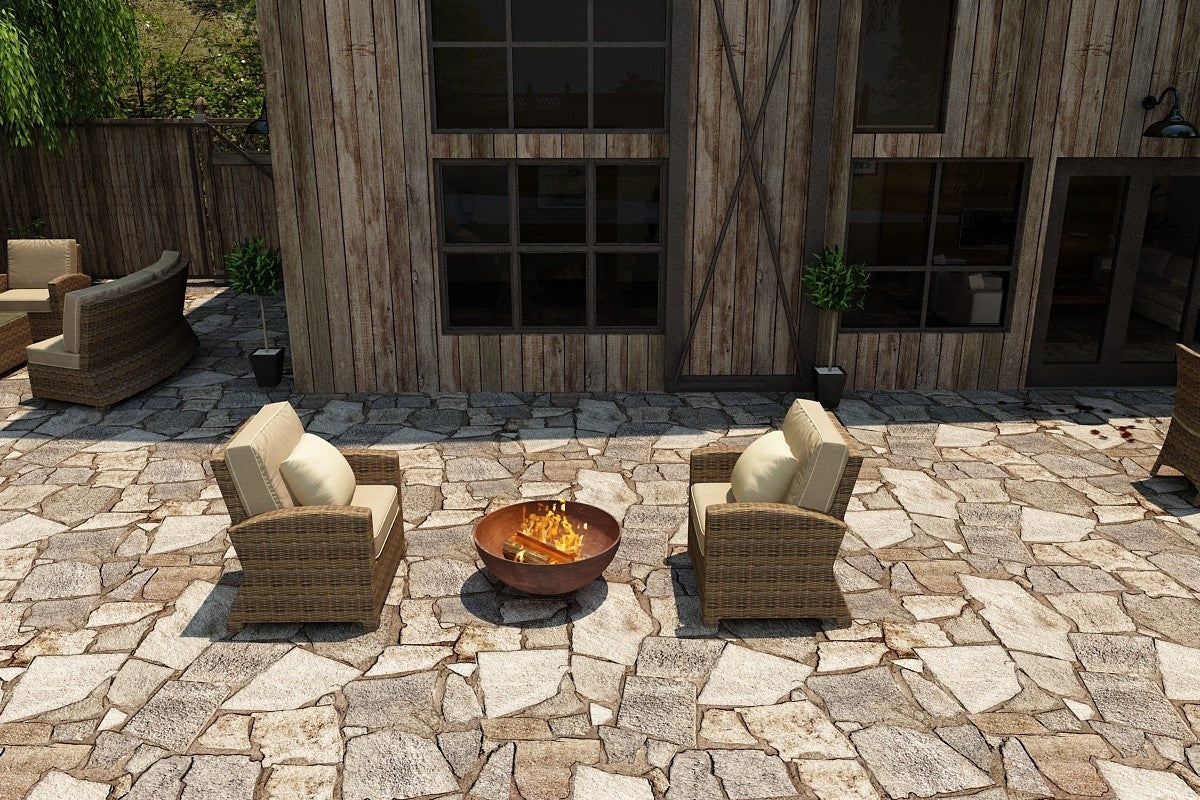
When people picture a wicker sectional on a covered patio, they’re almost always imagining synthetic HDPE wicker—not the natural rattan that cracks and molds outdoors within a season or two. Modern all-weather wicker is a woven resin strand (high-density polyethylene) wrapped over an aluminum frame. The combination gives you the organic, textured look of traditional wicker with meaningfully better resistance to moisture, UV, and temperature swings.
HDPE wicker handles moisture well and resists fading under UV exposure, though lower-grade PVC alternatives degrade noticeably faster—especially under intense sun. The quality gap between product tiers is wider here than with aluminum or teak, so construction details matter. Look for hand-woven, thick-strand HDPE with a welded aluminum inner frame. Machine-loomed, thin-strand wicker at the budget end of the market tends to fade and become brittle within three to four years.
The wicker itself typically lasts 10–15 years; the aluminum frame underneath will outlast it. Cushions require more attention than the frame—bringing them inside during heavy rain or storing them at the end of the season extends their life considerably. The woven surface can also trap debris in its crevices, so periodic cleaning with a soft brush is part of ownership.
Wicker sets tend to sit in the middle of the price spectrum. A well-constructed 5-piece HDPE conversation set from a premium brand typically runs $2,000–$5,500 with free shipping. Collections like the Bainbridge by Northcape pair rust-proof aluminum frames with Sunbrella cushions—a combination that addresses both the frame longevity and the cushion fade problem simultaneously.
Best for: Covered patios, transitional or coastal aesthetics, buyers who prioritize seating comfort and a woven texture, households in moderate-to-humid climates.
Teak: The Long-Game Material
Teak’s reputation in outdoor furniture isn’t marketing—it comes from centuries of use in shipbuilding, where the wood’s naturally high oil content protected hulls from saltwater, rot, and constant moisture. Those same properties translate directly to patio furniture. Teak does not rot, warp, or corrode. Its natural oils repel water absorption, resist insects, and allow the wood fibers to expand and contract through freeze-thaw cycles without cracking.
Aesthetically, teak is in a different category from aluminum and wicker. Fresh Grade A teak has a warm honey-golden tone that gradually weathers to a silvery-gray patina if left untreated—a look many homeowners actively prefer for its relaxed, coastal feel. If you want to preserve the original color, periodic cleaning and an annual application of teak oil keeps the warm tone intact. Either way, the choice is cosmetic, not structural.
The weight that makes teak stay put in wind is also what makes it harder to move around. A teak dining table or deep-seating sofa stays firmly anchored during storms—a genuine advantage in areas prone to summer weather events. But if your patio layout changes seasonally, teak’s density becomes a friction point.
High-quality Grade A teak furniture from reputable manufacturers lasts 20–30 years outdoors with minimal intervention. That lifespan changes the cost math considerably. A teak 5-piece dining set typically starts around $3,500 and can reach $8,000+ for premium brands with FSC-certified sourcing and mortise-and-tenon joinery. Spread over 25 years, the per-year cost often undercuts cheaper sets that need replacing every 5–8 years.
Best for: Permanent installations, coastal and organic-modern aesthetics, buyers who want a generational piece, households in variable or harsh climates.
Side-by-Side: How the Three Materials Stack Up
| Aluminum | HDPE Wicker | Teak | |
|---|---|---|---|
| Rust/Rot Resistance | Excellent (no iron) | Good (frame is aluminum) | Excellent (natural oils) |
| UV Resistance | Good (powder coat) | Good–Excellent (HDPE) | Excellent |
| Weight / Wind Stability | Light — can blow in wind | Moderate | Heavy — stays put |
| Maintenance | Very low | Low–Moderate (cushions) | Low–Moderate (optional oiling) |
| Lifespan | 10–20 years | 10–15 years (wicker) | 20–30 years |
| Aesthetic Range | Modern, contemporary | Coastal, transitional, classic | Coastal, traditional, organic-modern |
| Entry Price (5–7 pc set) | ~$1,800 | ~$2,000 | ~$3,500 |
| Free Shipping Available | Yes, most specialty retailers | Yes, most specialty retailers | Yes, most specialty retailers |
One note on free shipping: the logistics cost of a heavy teak set is real, even if the retailer absorbs it. When comparing total delivered cost between retailers, verify whether free shipping applies to your zip code and whether it covers threshold delivery only or includes white-glove placement.
Which Material Should You Choose?
The honest answer depends on three variables: your climate, how much you want to move the furniture, and how long you plan to own it.
If you’re in a hot, dry climate and want a sleek, low-maintenance setup you can rearrange for parties, aluminum is probably the right call. It handles UV well with its powder coat, cleans in minutes, and the modern silhouette works across a wide range of patio styles.
If you have a covered patio or a shaded pergola and want deep, comfortable seating that looks warm and inviting, HDPE wicker over an aluminum frame delivers that aesthetic without the upkeep of natural materials. Prioritize brands that use Sunbrella or equivalent solution-dyed fabrics for cushions—the frame will outlast cheap cushion fabric by years.
If you’re furnishing a space you intend to keep for a decade or more—or you live somewhere with salt air, heavy rain, or hard winters—teak earns its premium price tag. The per-year ownership cost is competitive once you account for longevity, and the material only improves in character as it ages.
For shoppers who want all three options in one place with free shipping on most orders, All Backyard Fun carries premium collections across materials—including Northcape’s wicker lines with rust-proof aluminum frames—so you can compare sets without bouncing between retailers. The store has been helping families build outdoor spaces since 2007, and the catalog reflects that depth of selection.