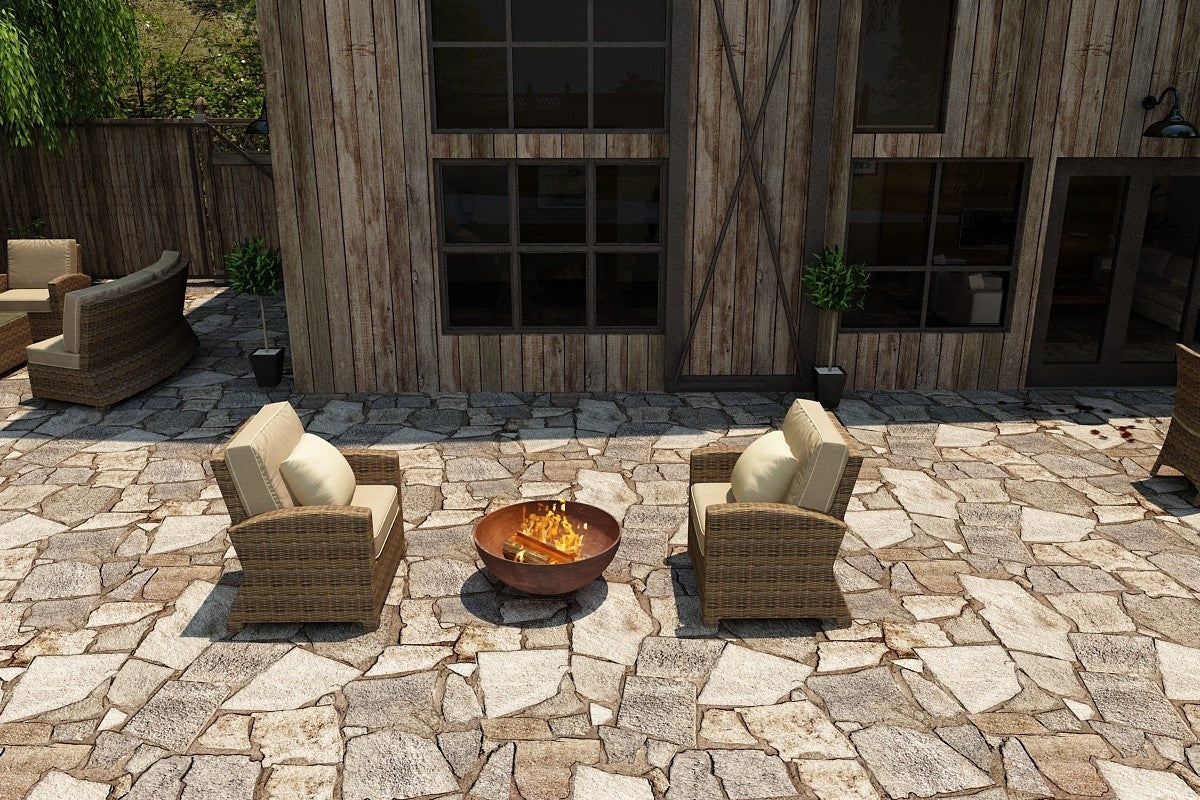

Two Materials, One Decision
Spend enough time shopping for outdoor furniture and you’ll notice the same two materials keep rising to the top of every shortlist: POLYWOOD recycled HDPE and powder-coated aluminum. Both resist rust. Both survive rain without a tarp. Both look sharp on a well-designed patio. So why does the choice feel so difficult?
Because the differences that actually matter — weight, long-term color retention, comfort without cushions, and what happens after a decade of sun exposure — rarely get spelled out side by side. This article does exactly that, so you can walk away knowing which material fits your backyard, your budget, and your maintenance tolerance.
A quick framing note: this comparison focuses on complete patio sets — dining sets, deep-seating conversation sets, and bar sets — rather than individual pieces. Mixing materials is always an option, but most buyers are choosing one primary set, and that’s the decision worth getting right.
What Each Material Actually Is
POLYWOOD is made from high-density polyethylene (HDPE), a type of plastic derived primarily from recycled milk jugs and detergent bottles. The raw HDPE is cleaned, melted, and extruded into lumber-profile boards that are then milled and assembled like traditional woodworking. The detail that matters most: the pigment is compounded into the HDPE during extrusion, so the color runs through the full thickness of the material. Scratch it and you’ll see the same color underneath — there’s no coating to chip or peel.
POLYWOOD also diverts hundreds of millions of plastic bottles from landfills annually through its HDPE recycling program, which gives it a meaningful sustainability edge over most competitors.
Aluminum patio furniture comes in two main forms. Cast aluminum is poured into molds, producing heavier, more ornate pieces with solid walls — think traditional scrollwork or detailed arm designs. Extruded and tubular aluminum is pushed through a die to create lightweight, hollow profiles better suited to clean, contemporary silhouettes. Both types are typically finished with a powder-coated paint baked onto the surface for durability. That coating is tougher than standard paint, but it is a surface finish — meaning deep scratches or chips can eventually expose bare metal to the elements.
The practical upshot: POLYWOOD’s color is structural; aluminum’s color is a finish. That single difference drives most of the long-term maintenance story.
Head-to-Head Comparison
| Category | POLYWOOD (HDPE) | Aluminum |
|---|---|---|
| Rust resistance | No metal, no rust possible | Naturally rust-resistant; powder coat adds protection |
| Color longevity | UV-stabilized pigment through full thickness | Powder coat can fade or chip over time |
| Weight | Heavier than aluminum — stays put in wind | Lightweight — easy to reposition, less wind-stable |
| Comfort (no cushions) | Contoured, ergonomic slat designs; usable without cushions | Frame alone is hard; cushions are generally required |
| Maintenance | Soap and water, no sanding or sealing ever | Wipe-down cleaning; inspect powder coat periodically |
| Lifespan | 20–30 years typical | 10–20 years with proper care |
| Warranty (brand-level) | POLYWOOD offers a 20-year warranty | Varies widely by manufacturer |
| Price range (4–6 pc set) | ~$800–$3,500+ | ~$400–$3,000+ |
| Sustainability | Made from recycled plastics; infinitely recyclable | Recyclable at end of life; lower recycled content upfront |
| Style range | Classic, coastal, Adirondack, modern modular | Broadest range — traditional to ultra-modern |
A few of these rows deserve more context than a table cell can hold.
Durability: Where POLYWOOD Has a Structural Advantage
Aluminum does not rust — that’s a genuine strength and the reason it dominates the mid-range patio market. But “rust-free” and “maintenance-free” aren’t the same thing. The powder-coated finish on aluminum can occasionally need refinishing if it gets scratched, and in coastal or high-humidity environments, salt air is aggressive enough that even good powder coating needs periodic inspection, with hardware rinsed regularly to prevent deterioration.
POLYWOOD sidesteps that entire category of concern. Because it contains no metal joints to corrode and no finish to strip away, it performs particularly well near water — pools, coastlines, humid climates. It doesn’t absorb moisture, so mold and mildew have nowhere to take hold. Freeze-thaw cycles that crack wood and stress metal welds simply have no effect on HDPE.
Aluminum has its own durability limitation worth knowing: thinner extruded or tubular frames can buckle or fold under heavy weight, and cheaper frames with thin welds can weaken over multiple winters. Cast aluminum avoids most of this — it’s heavy enough to resist wind displacement and strong enough to handle sustained loads — but it costs more and weighs considerably more than extruded alternatives.
For buyers in coastal zones, regions with harsh winters, or anyone who wants to leave furniture outside year-round without a second thought, POLYWOOD’s durability profile is probably the stronger long-term bet. For buyers in mild climates who prioritize lightweight furniture they can rearrange easily, quality aluminum performs well with modest upkeep.
Comfort and Everyday Usability
Aluminum furniture is almost always sold with cushions, and for good reason — the frame alone is uncomfortable to sit on for any length of time. The cushions are typically the first component to wear out, and they’ll need replacing long before the frame does. Quick-dry foam and solution-dyed fabrics have improved significantly, but cushion storage, cleaning, and eventual replacement are ongoing costs and tasks that aluminum buyers should factor in.
POLYWOOD chairs and seating are designed with contoured seats and backs that are genuinely usable without cushions — a meaningful advantage for pool decks, beach houses, or anyone who doesn’t want to manage cushion storage. That said, deep-seating POLYWOOD sets like the EDGE 5-Piece Modular Deep Seating Set do include plush pillow-back and seat cushions covered in high-performance outdoor fabric, giving buyers the option of cushioned comfort without sacrificing the durability of the HDPE frame underneath.
One comfort note that often gets overlooked: aluminum frames can become warm when exposed to direct sunlight, though in real-world use the metal cools down quickly and cushions act as a barrier. POLYWOOD runs slightly warmer to the touch than aluminum in direct sun but doesn’t conduct heat the way metal does. Neither is a serious problem in practice — shade structures, umbrellas, and cushions resolve both.
Sustainability: An Honest Look
POLYWOOD’s environmental story is more concrete than most furniture brands’. The lumber is made from recycled plastics — primarily milk jugs and detergent bottles — and the material is infinitely recyclable at end of life. POLYWOOD furniture is also manufactured in the USA at facilities in Indiana and North Carolina, which shortens the supply chain and reduces shipping emissions relative to overseas-produced alternatives.
Aluminum has a legitimate environmental counterpoint: powder-coated aluminum frames last longer than painted finishes, which reduces the frequency of refinishing and the associated chemical waste, and when aluminum furniture does reach end of life, the metal is fully recyclable. Aluminum production itself is energy-intensive, but the metal’s recyclability means a well-maintained aluminum set can have a reasonable lifecycle footprint.
For buyers where sustainability is a deciding factor, POLYWOOD’s use of post-consumer recycled content gives it a clearer, more verifiable environmental claim. Aluminum’s case rests more on recyclability at end of life — a meaningful but less immediate benefit.
Price: What You’re Actually Paying For
Entry-level aluminum sets start lower than comparable POLYWOOD sets — you can find a decent 4-piece aluminum conversation set for under $600, whereas POLYWOOD sets at the same size typically start closer to $800–$900. That gap narrows at the mid-range and nearly disappears at the premium tier.
But the sticker price comparison misses the total cost of ownership. POLYWOOD sets carry a 20-year warranty and require no sanding, painting, sealing, or cushion replacement if you choose a cushion-free design. A well-maintained aluminum set typically lasts 10–15 years, and cushion replacement — even once over that period — adds $200–$600 depending on the set. Over a 20-year horizon, a POLYWOOD set often costs less per year than a mid-grade aluminum set with cushions.
Aluminum remains the better value for buyers who want a lower upfront investment, plan to update their outdoor aesthetic in five to seven years, or specifically want lightweight furniture they can move and store easily. POLYWOOD makes more financial sense for buyers who want to buy once, leave it outside, and not think about it again for two decades.
Which Should You Choose?
Choose POLYWOOD if:
- You want to leave furniture outside year-round with zero seasonal prep
- You live near the coast, in a high-humidity region, or somewhere with hard winters
- Sustainability and recycled content matter to your purchase decision
- You prefer seating that works without cushions (pool deck, kids’ play area, beach house)
- You’re buying for the long term and want a 20-year warranty to back that up
Choose aluminum if:
- You want a lower upfront price and plan to refresh your patio aesthetic in 5–10 years
- You prioritize lightweight furniture you can easily reposition or store
- You want the broadest possible range of styles, from ornate traditional to sleek contemporary
- You’re in a mild, dry climate where powder-coat maintenance is minimal
- You already have a cushion setup you love and want to keep
For most buyers who want a set they’ll use hard for 15+ years without refinishing, resealing, or replacing cushions, POLYWOOD is the stronger material choice. For buyers optimizing for upfront value and flexibility, quality aluminum — particularly cast aluminum rather than thin tubular frames — delivers solid performance at a lower entry point.
All Backyard Fun carries a full range of POLYWOOD outdoor furniture sets, from dining collections to deep-seating modular configurations, alongside premium aluminum and mixed-material sets from brands like Northcape and Sunset West. If you’re working through the decision and want to compare specific sets side by side, their team has been helping families build outdoor spaces since 2007 — they’re worth a conversation before you commit to either material.