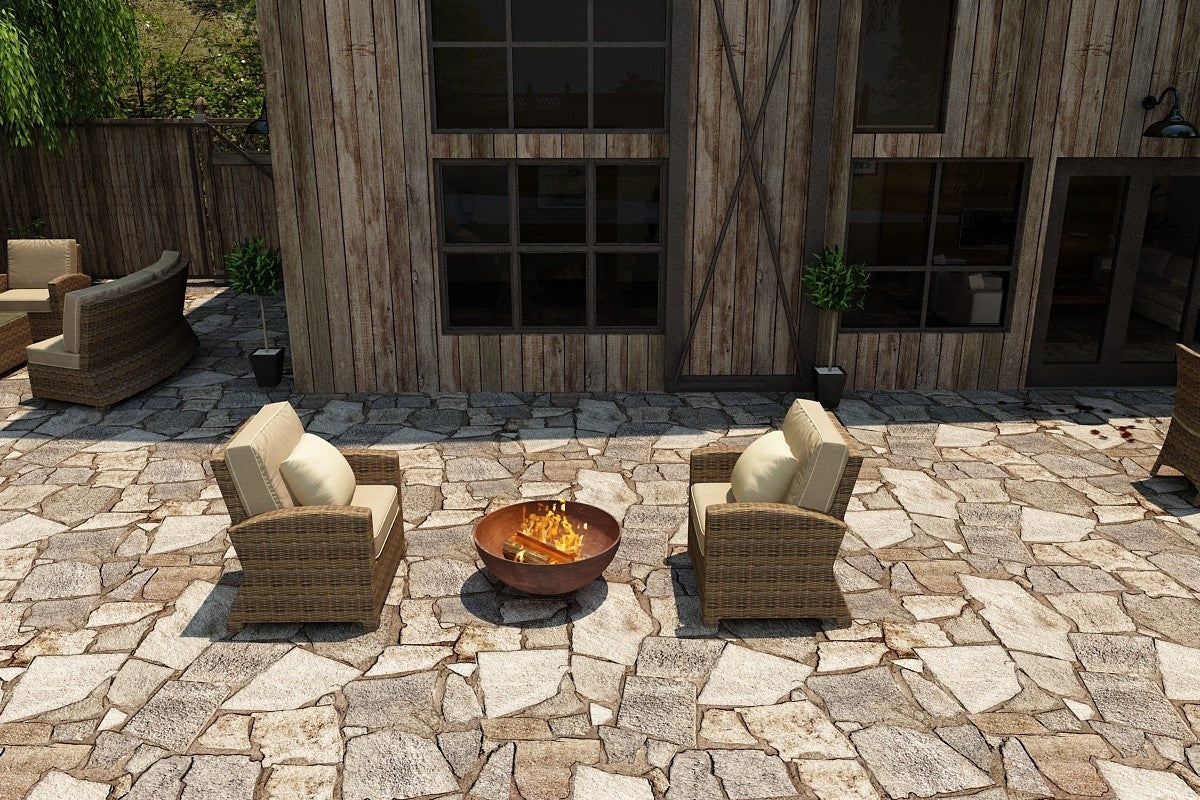

The Piece That Makes Everything Else Make Sense
Walk out onto most patios and you’ll find the same arrangement: a few chairs pointed vaguely inward, a side table holding a citronella candle, and a general sense that nobody quite decided what this space is for. That’s the real problem most outdoor living projects face—not a lack of furniture, but a lack of a focal point that gives the whole room its reason for existing.
A fire pit table with a natural stone top solves that problem in a way that almost nothing else does. It combines three things that are hard to find in a single piece: genuine visual weight, functional surface area, and warmth that pulls people in. Put one at the center of a seating arrangement and the patio stops being a leftover corner of the yard and starts operating like an actual room. Chairs face it instinctively. Conversations form around it. People stay longer than they planned.
In 2026, the trend data backs this up. Tabletop fire table designs are growing at roughly 10% annually—the highest rate among all fire feature shapes—driven by homeowners who want something that serves multiple purposes without looking like it was designed by committee. And the material choice at the top of that market? Natural stone, or stone-finished surfaces engineered to match it.
What Natural Stone Actually Brings to the Table (Literally)
There’s a reason high-end residential designers and landscape architects keep returning to natural stone as a surface material. Stone doesn’t try to look expensive—it simply is. The variation in color, the slight texture under your fingertips, the way firelight plays across an uneven surface: none of that can be fully replicated by powder-coated steel or injection-molded resin, no matter how convincing the finish.
The most common stone varieties used in premium fire tables each bring something distinct. Granite is probably the most durable choice in this category—formed under intense pressure over millions of years, it handles heat exceptionally well, resists moisture, and comes in a wide range of colors from deep black to warm gold. Travertine sits at the warmer, earthier end of the spectrum: a sedimentary limestone with organic pitting and natural tones ranging from creamy white to rich tan, it tends to stay cooler to the touch than denser stones and pairs naturally with Mediterranean or transitional outdoor aesthetics. Bluestone offers a cleaner, more contemporary look with its smooth slate-like texture and cool gray-blue tones, handling heat well with minimal maintenance. Sandstone brings warm, grained character and works particularly well in relaxed, casual settings.
Beyond aesthetics, natural stone ages in a way that most manufactured materials don’t. Rather than fading or chipping over years of sun and weather exposure, stone tends to develop a patina that adds character over time. That quality matters when you’re making a purchase that’s meant to anchor your outdoor space for the next decade or longer.
For buyers who want the look of natural stone with added structural resilience, engineered stone-surface options—like the fiberglass-reinforced quartz concrete used in certain Oriflamme fire tables—offer a compelling middle ground. Each tabletop is hand-troweled and finished with natural iron oxides, meaning no two surfaces look identical, while the underlying composite material handles the demands of outdoor use without cracking or fading the way raw stone sometimes can under extreme weather cycling.
Why the Fire Table Format Outperforms a Standalone Fire Pit
A traditional fire pit bowl is a perfectly good thing. But it asks everyone to gather around it in a way that’s slightly awkward—you’re leaning toward a heat source at ground level, your drink has nowhere to go, and the moment the fire dies down, there’s nothing left to anchor the seating arrangement.
A fire pit table changes the geometry entirely. At coffee table height—typically around 22 inches—it sits at exactly the right level to distribute warmth across a full seating circle while also functioning as a legitimate surface for drinks, appetizers, and the general detritus of an evening outside. The fire becomes the center of the table rather than a separate object everyone is orbiting.
And when you add a natural stone top to that format, the table earns its place even when the burner is off. Cover the fire insert with the metal lid and you have a genuinely beautiful outdoor coffee table—one with enough visual presence to hold a seating arrangement together on a warm night when you don’t need the heat. That dual-purpose quality is something a standalone fire bowl simply can’t offer.
This is the design logic that separates a luxury patio from a well-furnished one. Every piece in a premium outdoor space should justify its footprint whether it’s in active use or not. A natural stone fire table does that.
Building the Space Around It
The most common mistake people make when designing around a fire table is treating it as an afterthought—buying the seating first, then trying to find a fire feature that fits. The better approach is the reverse. Start with the fire table, let its dimensions and finish drive the rest of the decisions, and work outward from there.
For a natural stone top table, the surrounding furniture tends to work best when it doesn’t compete. Deep-seating sofas and chairs in neutral tones—warm grays, taupes, natural linen—let the stone surface be the visual anchor without turning the patio into a showroom. Woven materials like all-weather wicker add organic texture that echoes the stone without matching it too literally. Teak and other hardwoods bring warmth that complements stone’s coolness.
Size matters more than most buyers expect. A 42-inch round table comfortably anchors four to five chairs; a 48-inch round or a rectangular format can handle six to eight. The goal is to keep the seating close enough that the heat reaches everyone without anyone feeling crowded. At coffee table height, the warmth radiates outward at exactly the right angle for people seated in standard lounge chairs.
Lighting is the other piece most people underinvest in. The flickering light from a gas fire table creates a natural ambient glow, but supplementing it with low-voltage path lights or string lights overhead extends the usable hours of the space well past sunset. The stone surface catches that light in a way that reinforces the warmth of the whole setting.
If you’re looking for a starting point, the Oriflamme fire tables collection at All Backyard Fun offers several stone-finish options—including the Savanna Stone and granite variants—that are worth exploring as a design anchor. The granite collection in particular features authentic natural stone tops in finishes like Silver Tiger and Black Pearl, giving buyers the actual material rather than a simulation of it.
The Investment Case: Why This Isn’t Just About Aesthetics
Outdoor kitchens, professionally designed patios, and fire features consistently rank among the highest-return backyard improvements—both for quality of life and property value. A natural stone fire pit table sits at the intersection of all three categories: it’s a fire feature, it’s a functional outdoor furniture piece, and when chosen well, it reads as a design statement that elevates the perceived quality of everything around it.
The durability argument is worth taking seriously. A well-made stone-top fire table—whether the top is genuine granite, engineered travertine, or a quartz-concrete composite—should last well over a decade with basic care. Compare that to lower-cost alternatives with painted steel tops or ceramic tile surfaces, which tend to show wear within a few seasons of regular use. The math on cost-per-year of enjoyment usually favors the premium option.
One feature worth specifically looking for in this category: interchangeable parts. Some fire table manufacturers design their products so that individual components—including the tabletop itself—can be replaced or upgraded over time rather than requiring full replacement. That kind of modularity means the table can evolve with your taste and your space, rather than becoming a liability the moment a finish goes out of style or a part wears out.
For buyers who want to see how a stone-top fire table fits into a complete outdoor living setup, browsing the full fire tables collection alongside patio furniture options gives a useful sense of how these pieces work together. The goal isn’t just to buy a fire table—it’s to build a space that functions like an outdoor room, one that your household actually uses rather than admires from inside the house.
A natural stone top fire pit table won’t fix a poorly planned layout or compensate for uncomfortable seating. But when the fundamentals are right, it’s the piece that makes the whole space feel intentional—the thing guests notice first and remember longest.